Has the UK Government Affected Investment and Growth of Small Businesses?
The latest CBI composite growth indicator shows private sector growth expectations remain weak. At the same time, Office for National Statistics data indicates the UK economy contracted in both April and May after strong growth in the first quarter, while payroll numbers have fallen for the fifth consecutive month.
Together, these figures suggest a business environment where confidence is trying to recover, yet uncertainty and cost pressures still deter many small firms from making bold investment decisions.
This article asks a simple question: has recent government policy helped or hindered small-business investment and growth? We examine how current policies and economic trends influence SME decisions, and outline practical, low-risk steps owners can take now to protect profitability and prepare for growth in a climate where the rules seem to change every few months.
Mixed signals in UK business confidence
As at July 2025, the business climate is a patchwork of modest improvements and ongoing strain. According to the CBI’s composite growth indicator, private sector growth expectations remain weak overall. Firms expect activity to fall at a weighted balance of –18% in the three months to September, while private sector activity fell by –26% in the three months to June, matching May’s pace. Many leaders still lack the confidence to forecast strong growth, even though some regions are seeing slight improvements.
Hiring pressures are mounting
ONS data shows the number of people on payrolls has declined for five months in a row. For employers—especially SMEs—this suggests they are either struggling to afford current staffing levels or are reluctant to hire due to uncertain demand. The result can be pressure on remaining staff, lower morale and reduced productivity.
Economic momentum has slowed
After a strong first quarter, GDP fell in April and May, signalling that early-year momentum has waned. For small businesses, this can mean softer consumer spending, slower supply chains and tougher competition for fewer customer pounds.
Sector performance remains uneven
Services remain the main engine of expansion—restaurants, pubs and hospitality continue to attract custom—but rising costs and staffing gaps mean owners work harder for each sale. Manufacturing and construction face elevated input and energy costs, softer demand and project delays. While some businesses can still find growth, many are focused on staying stable in a shifting landscape.
How policy shapes SME investment
Government policy strongly influences SME spending. Many owners are postponing major purchases—equipment, premises, new product lines—because higher taxes, rising costs and uncertain demand make such moves feel risky. Even firms with cash or credit hesitate when they cannot predict policy impacts.
This uncertainty also curbs hiring. When trade, tax or regulatory rules may change, owners pause recruitment, expansion and long-term contracts. Incentives such as tax reliefs and digital grants exist, but many smaller firms struggle to apply or do not qualify, leaving support unused. While confidence has ticked up in places, investment growth remains weak—clear, consistent policies are needed before SMEs commit to bigger plans.
The growth challenge for small businesses
Rising energy bills, higher wages and more expensive supplies have eroded margins, leaving less to reinvest. Even with steady sales, profits can be too thin to build reserves or fund development. Larger, more automated competitors intensify the pressure, using stronger supply chains and technology to offer lower prices and faster service. Smaller firms cannot always match that efficiency without significant upfront costs. Owners must balance daily operations with long-term planning, prioritising tools that save time, cut errors and speed up service.
Why efficiency-first investments make sense now
Freezing spend is tempting, but smart, low-risk upgrades can strengthen resilience. Tools such as LRS paging solutions streamline communication, speed service and reduce mistakes—helping teams do more without adding headcount. They are affordable, quick to deploy and often pay back within months through higher productivity. In a period of rising wages, tighter rules and unpredictable costs, these gains help protect margins, sustain service quality and keep smaller firms competitive.
Working smarter under pressure with LRS paging systems
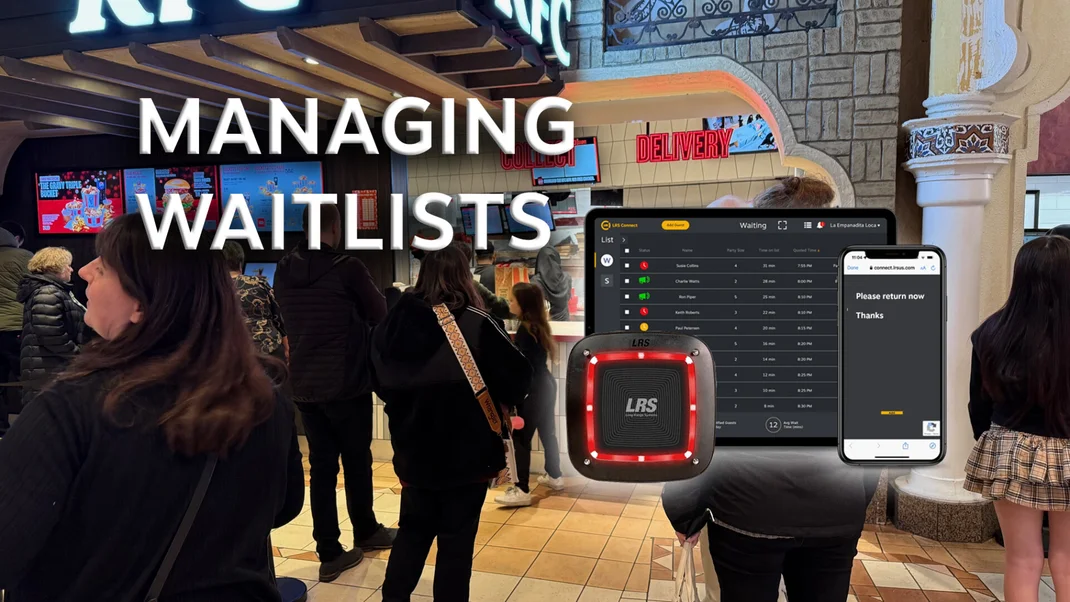
Long Range Solutions (UK) provides simple, effective paging systems and tools such as Table Tracker and multi-waitlist software to help teams work faster and communicate clearly. Devices send instant alerts to staff via pagers, buzzers or SMS, eliminating shouting, phone tag and needless back-and-forth.
In restaurants and pubs, chefs can page servers when food is ready so meals arrive hot, waits shorten and tables turn faster—boosting revenue without extra staff. In warehouses and retail, managers can call staff to tills or urgent tasks without leaving stations, cutting delays and keeping workflows moving. By improving speed and reducing wasted effort, LRS systems lower labour costs, lift customer satisfaction and make growth easier even as budgets tighten.
Policy sets the stage—owners decide how to respond
Government policy influences growth prospects, but impact varies by sector. Hospitality may expand while manufacturing and construction face headwinds. Owners cannot control tax, rates or global trends, but they can control how they adapt. Waiting for perfect conditions risks falling behind; investing in efficiency now can protect profits and preserve an edge.
Practical steps for SMEs
• Audit costs and processes to target quick wins that save time or reduce errors.
• Prioritise tools that improve throughput without adding headcount.
• Strengthen cashflow forecasting to time upgrades and stock wisely.
• Collaborate closely with customers and suppliers to stabilise demand and supply.
• Track relevant grants and reliefs; apply where eligible.
Visit the Long Range Systems UK Ltd website for more information on Has the UK Government Affected Investment and Growth of Small Businesses?
ENQUIRY FORM